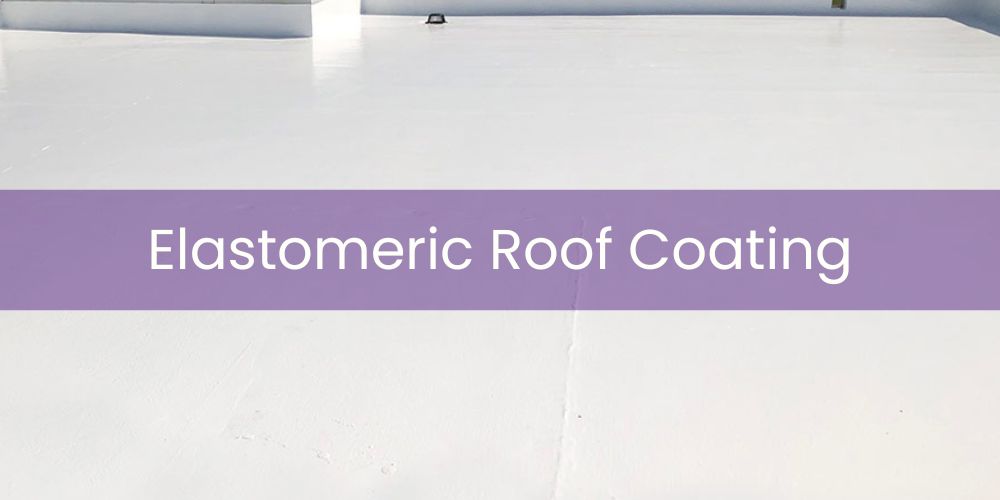
Commercial Roofing Los Angeles applies elastomeric roof coatings across Los Angeles to block heat absorption, seal surface cracking, and stabilize commercial roofing systems exposed to extreme sun and thermal movement. Elastomeric roof coating is the process of applying a flexible, rubber-like membrane over an existing commercial roof to reflect ultraviolet radiation, bridge surface cracks, and prevent moisture intrusion. This system allows Commercial Roofing Los Angeles to extend roof life, reduce cooling demand, and stop heat-driven membrane failure caused by Southern California’s intense solar exposure. Elastomeric coatings are used on Los Angeles commercial roofs where UV radiation, daily temperature swings, and rooftop vibration have dried, fractured, or weakened the existing roof surface. By forming a continuous, elastic barrier over the roof, elastomeric coatings prevent heat-induced expansion and contraction from reopening seams and allowing water to enter the roofing system. Commercial Roofing Los Angeles applies elastomeric coating systems to keep commercial buildings watertight, energy-efficient, and structurally protected under Los Angeles climate conditions.
How Does Elastomeric Roof Coating Stop Heat-Driven Cracking and Water Intrusion on Los Angeles Commercial Roofs?
Los Angeles commercial roofs fail because heat makes roofing materials move. Constant solar radiation heats roof surfaces every day, causing membranes, coatings, and seams to expand. At night, those same materials cool and contract. On flat and low-slope commercial roofs, this daily thermal cycling creates stress that opens micro-cracks, weakens seams, and fractures aging roof surfaces. Once these openings form, rain and condensation enter the system, soak insulation, and migrate beneath the roof surface, creating leaks that spread far beyond the original failure point. Commercial Roofing Los Angeles stops this process by applying elastomeric roof coating to create a flexible, reflective, and continuous surface over the roof. The coating stretches and contracts with the roof as temperatures rise and fall, preventing cracks from opening and seams from separating. Worn areas, joints, and surface defects are encapsulated so heat and moisture cannot penetrate into the roofing assembly. By reflecting solar radiation, the coating also reduces surface temperatures, limiting the thermal stress that causes membranes to degrade. Elastomeric roof coatings installed by Commercial Roofing Los Angeles are engineered to remain elastic under extreme heat while maintaining strong adhesion to the existing roof substrate. This allows the coated roof to move with the building without tearing or losing its waterproof seal. The result is a stabilized roofing surface that blocks UV damage, prevents water migration, and preserves the thermal and structural performance of Los Angeles commercial buildings.
What Is Elastomeric Roof Coating and How Is It Used in Los Angeles?
Elastomeric roof coating is a roof restoration service that applies a flexible, fluid-applied membrane over an existing commercial roofing system to restore surface protection and waterproof continuity. The service is defined by substrate preparation, localized reinforcement, and controlled membrane application rather than removal of the underlying roof assembly. Elastomeric coatings cure into a continuous elastic film that adheres to compatible roof surfaces where the structural deck and insulation remain serviceable. In Los Angeles, Commercial Roofing Los Angeles uses elastomeric roof coating on warehouses, office buildings, retail centers, and industrial properties where roofs are exposed to sustained radiative stress, thermal cycling, and intermittent moisture exposure. The service is applied when ultraviolet degradation, heat-driven movement, and surface cracking have compromised the roof’s outer layer but full replacement is not required. Coating systems are selected and detailed based on roof type, movement behavior, and drainage characteristics typical of Southern California commercial buildings.
The material and application decisions that allow elastomeric roof coating to perform in Los Angeles create the following performance relationships:
- Elastomeric polymer membrane → provides elastic recovery → thermal cycling does not fracture the coating
- Continuous fluid-applied surface → eliminates lap seams → hydrological exposure cannot migrate between joints
- High solar reflectivity → reduces radiative stress → surface temperatures do not accelerate roof degradation
- Reinforced seams and penetrations → stabilize high-stress interfaces → movement does not reopen leak paths
- Adhered coating-to-substrate bond → anchors the membrane → wind forces do not lift or peel the coating
- UV-resistant formulation → slows photodegradation → prolonged sun exposure does not erode waterproofing
- Surface encapsulation → isolates underlying materials → aging membranes do not release moisture into the system
Have a question about an upcoming project?
Where Does Elastomeric Roof Coating Absorb Thermal Movement and Surface Stress on Los Angeles Commercial Roofs?
We apply elastomeric roof coating on Los Angeles commercial roofs where thermal movement and surface stress concentrate at specific roof components rather than across the field evenly. Under constant solar exposure, roof surfaces heat rapidly during the day and cool just as quickly at night, forcing expansion and contraction to concentrate at seams, penetrations, transitions, and previously repaired areas. When we install elastomeric roof coating, the elastic membrane bridges these stress zones so movement is absorbed within the roof coating layer instead of being transferred into the underlying membrane, insulation, or deck. This prevents recurring surface cracks and seam fatigue from reopening under daily heat cycling. On Los Angeles buildings with rooftop equipment, walk paths, and drainage features, mechanical vibration and localized heat buildup accelerate surface breakdown. We reinforce elastomeric coatings at penetrations, curbs, drains, and traffic paths to maintain membrane thickness and elasticity where abrasion and stress are highest. By preserving coating integrity in these zones, surface wear does not expose the underlying roof or allow moisture to enter during infrequent but intense rain events. This keeps water above the waterproofing plane instead of migrating laterally through insulation layers. Extended dry periods and extreme UV exposure further differentiate Los Angeles roof behavior. Unprotected roof surfaces harden and lose flexibility over time, increasing crack propagation during thermal movement. Elastomeric roof coatings maintain elastic recovery and adhesion under prolonged heat, allowing the roof surface to flex repeatedly without tearing or separating. By controlling where thermal stress is absorbed and preventing surface embrittlement, elastomeric roof coating stabilizes roof performance and preserves waterproofing continuity across Los Angeles commercial buildings.
In practice, elastomeric roof coating performance on Los Angeles buildings can be reduced to direct cause-and-effect relationships between coating elasticity, localized thermal stress, and roof system outcomes.
- Elastomeric coating elasticity → daily thermal expansion and contraction → surface cracks do not reopen
- Reinforced coating at seams and penetrations → concentrated movement zones → leak paths do not form
- Maintained coating thickness at walk paths → abrasion and heat buildup → underlying membrane is not exposed
- Elastic adhesion to substrate → prolonged dry-heat cycles → coating does not harden or delaminate
- Continuous reflective coating surface → sustained solar loading → surface temperatures remain controlled
When Do Elastomeric Roof Coatings Become the Correct Solution for Los Angeles Commercial Buildings?
If your Los Angeles commercial roof requires a flexible surface protection system to accommodate thermal movement, minor structural flexing, and surface cracking, an elastomeric roof coating may be the correct stabilization solution. Under intense sun exposure and daily temperature cycling, roofs that expand and contract can fatigue rigid surfaces, reopen seams, and accelerate membrane wear even when the underlying roof assembly remains serviceable. Elastomeric coatings are designed to stretch, recover, and maintain waterproofing continuity as the roof moves, reducing heat-driven cracking and surface failure. We determine whether your roof’s movement behavior, surface condition, and drainage characteristics make it suitable for elastomeric coating rather than rigid coatings, localized repairs, or full system replacement. If your roof shows heat-related surface cracking, elastic fatigue, or movement-driven wear—but does not have widespread insulation saturation or structural failure—an elastomeric coating may be the appropriate solution under Los Angeles conditions.