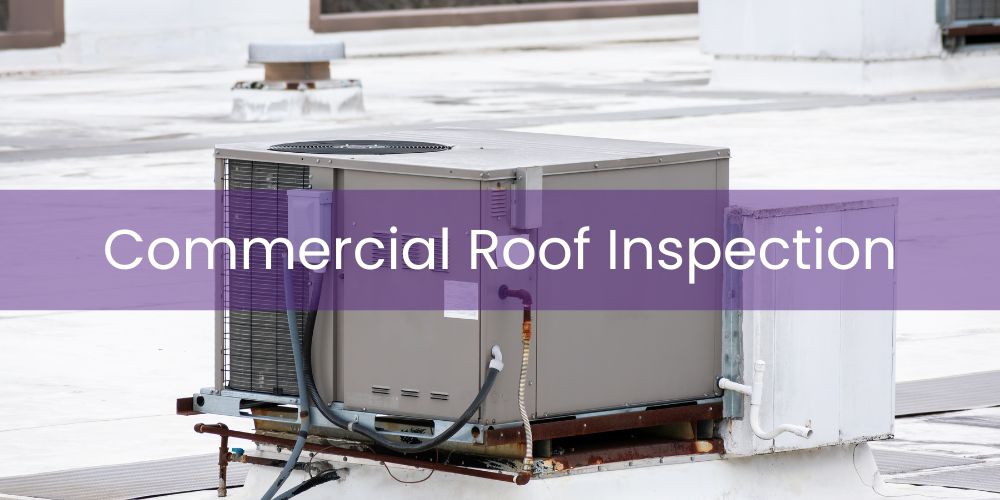
Commercial Roofing Los Angeles performs commercial roof inspections across Los Angeles to detect moisture intrusion, identify heat and structural stress, and prevent hidden roof failures before they damage commercial buildings. Commercial roof inspection is the process of systematically evaluating membranes, seams, flashings, drainage systems, insulation conditions, and structural attachment points to determine how a roofing system is actually performing under Southern California’s extreme sun, heat, and thermal movement. This allows Commercial Roofing Los Angeles to locate cracks, seam separations, ponding zones, and moisture pathways that allow water and heat to degrade roofing systems from the inside. Commercial roof inspections are used on Los Angeles buildings where intense UV exposure, daily thermal expansion, and rooftop equipment loads have begun to weaken the roof surface even when leaks are not yet visible. By revealing where energy loss, moisture migration, and structural fatigue are occurring, roof inspections prevent small defects from becoming system-wide failures. Commercial Roofing Los Angeles uses inspections to keep commercial roofs stable, watertight, and operational under Los Angeles conditions.
How Do Commercial Roof Inspections Prevent Hidden Water and Heat Damage on Los Angeles Buildings?
Los Angeles commercial roofs fail because damage starts below the surface. Intense solar radiation hardens and cracks roof membranes, thermal cycling pulls seams apart, and flat roof geometry allows moisture to remain trapped. Water enters through microscopic openings, spreads through insulation, corrodes fasteners, and weakens the roof deck long before stains or drips appear inside the building. By the time leaks are visible, structural and thermal damage has often already spread across large roof areas. Commercial Roofing Los Angeles stops this process by using commercial roof inspections to find where heat and water are already moving through the system. Membranes are examined for UV degradation and seam fatigue, flashings are checked for separation, drains are evaluated for ponding risk, and insulation is assessed for hidden moisture. These inspections reveal how the roof is responding to Los Angeles heat loads, rooftop traffic, and weather exposure so vulnerabilities can be sealed before they expand. Commercial roof inspections performed by Commercial Roofing Los Angeles allow corrective repairs, coatings, or reinforcements to be applied at the exact failure points instead of after widespread damage occurs. This prevents water from migrating, stops heat from driving further material breakdown, and preserves the structural and energy performance of Los Angeles commercial roofs long before catastrophic failure begins.
What Is Commercial Roof Inspection and How Is It Used in Los Angeles?
Commercial roof inspection is a diagnostic service that evaluates the condition, performance, and risk profile of a commercial roofing system without altering the roof assembly. The service is defined by systematic surface examination, component assessment, and moisture evaluation rather than repair or replacement activity. Inspections document existing conditions across membranes, seams, penetrations, drainage components, and attachment points to establish an accurate baseline of roof integrity. In Los Angeles, Commercial Roofing Los Angeles performs commercial roof inspections on warehouses, office buildings, retail centers, industrial facilities, and multi-tenant commercial properties where roofs are exposed to sustained radiative stress, thermal cycling, mechanical activity, and episodic rainfall. Inspections are used to identify heat-related degradation, movement-induced stress, drainage deficiencies, and early-stage moisture intrusion common to Southern California commercial roofs. Findings are applied to commercial roof maintenance planning, repair prioritization, and capital decision-making.
The inspection methods and evaluation criteria that allow commercial roof inspection to perform in Los Angeles create the following performance relationships:
- Systematic surface review → identifies material degradation → radiative stress damage is detected before failure
- Seam and penetration assessment → isolates high-stress interfaces → thermal cycling defects are found early
- Drainage evaluation → measures hydrological exposure → ponding risk is identified before infiltration occurs
- Fastener and attachment checks → detect mechanical loosening → vibration-related movement is corrected pre-failure
- Moisture detection procedures → locate subsurface water → hidden saturation does not spread through insulation
- Documentation and condition mapping → establish performance baseline → deterioration trends are tracked over time
- Inspection scheduling cadence → aligns with stress cycles → emerging defects are addressed before escalation
Have a question about an upcoming project?
Where Do Commercial Roof Inspections Reveal Stress Concentration and Failure Risk on Los Angeles Roofs?
We perform commercial roof inspections on Los Angeles buildings where heat, movement, and moisture stress concentrate at specific roof components rather than presenting as uniform surface damage. Sustained solar exposure accelerates membrane aging at seams and transitions, while daily thermal expansion places repeated strain on penetrations, fasteners, and attachment points. During inspection, we trace these stress patterns by examining seam integrity, flashing continuity, and surface condition to determine where thermal movement is already creating openings that allow water or heat to move into the roof assembly. On flat commercial roofs, moisture-related risk is often tied to drainage behavior rather than visible leaks. We evaluate drains, scuppers, low points, and slope transitions to identify where condensation and rainfall remain on the roof long enough to enter seams or saturate insulation. Insulation condition, fastener corrosion, and deck interfaces are assessed to confirm whether moisture is migrating laterally beneath the membrane, which is the primary mechanism by which hidden roof damage spreads across Los Angeles commercial buildings. We also assess how operational stresses affect roof performance over time. Rooftop equipment, service traffic, and vibration concentrate loads at specific zones, accelerating seam fatigue and fastener loosening even when surface membranes appear intact. By identifying where mechanical stress overlaps with thermal and moisture exposure, commercial roof inspections allow corrective action to be applied precisely at failure-prone elements before defects propagate into system-wide degradation.
In practice, commercial roof inspection performance on Los Angeles buildings can be reduced to direct cause-and-effect relationships between observed roof conditions, localized stressors, and future failure risk.
- Seam condition assessment → thermal cycling → separation risk is identified early
- Drain and low-point evaluation → standing water exposure → ponding-driven infiltration risk is detected
- Insulation moisture checks → subsurface water migration → hidden saturation is confirmed before spread
- Fastener and attachment review → vibration and movement → loosening is identified pre-failure
- Penetration and flashing inspection → concentrated stress zones → leak initiation points are isolated
When Do Los Angeles Commercial Roofs Need a Professional Inspection?
If your Los Angeles commercial building has an aging roof or has been exposed to prolonged sun, heat, and rooftop activity, hidden moisture intrusion and structural stress can develop long before leaks are visible inside. Under daily thermal expansion and intense UV exposure, small defects at seams, flashings, drains, and attachment points allow heat and moisture to move through the roof assembly, gradually weakening insulation and deck components from within. A professional roof inspection is used to identify these conditions early, before surface symptoms turn into leaks or structural damage. If you’re experiencing recurring minor issues, unexplained energy loss, ponding water, or simply need a clear understanding of your roof’s current condition under Los Angeles climate stresses, a professional inspection can locate developing failure paths and document the true state of the roofing system.