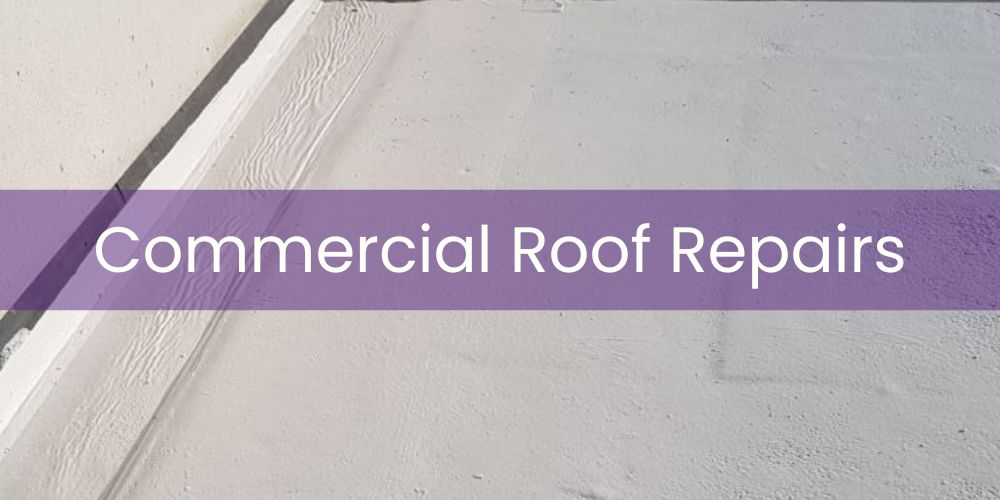
Commercial Roofing Los Angeles performs commercial roof repairs across Los Angeles to stop active leaks, seal damaged roof areas, and restore waterproofing on commercial roofing systems exposed to extreme heat and weather stress. Commercial roof repair is the process of locating, cutting out, reinforcing, and resealing damaged membrane sections, seams, flashings, and penetrations so water cannot enter or migrate beneath the roof surface. This allows Commercial Roofing Los Angeles to halt moisture intrusion, prevent insulation saturation, and stabilize roof systems that have been weakened by UV exposure, thermal movement, and rooftop wear. Commercial roof repairs are used on Los Angeles buildings where heat, sunlight, and standing water have cracked membranes, pulled seams apart, or degraded flashing systems, allowing leaks to spread beneath the roof. By restoring surface continuity and drainage performance, roof repairs prevent localized failures from becoming system-wide damage. Commercial Roofing Los Angeles applies professional roof repair methods to keep commercial buildings watertight, energy-efficient, and structurally protected across Southern California.
How Do Commercial Roof Repairs Stop Water Migration and Heat-Driven Damage on Los Angeles Roofs?
Los Angeles commercial roofs fail because water and heat work together to destroy membrane integrity. Intense UV radiation dries and weakens roofing materials, while daily temperature swings cause membranes and seams to expand and contract. Over time, this movement creates cracks, split seams, and flashing failures that allow rain and condensation to enter the roofing system. Once water gets beneath the surface, it spreads laterally through insulation and deck layers, creating hidden leaks and accelerating structural deterioration. Commercial Roofing Los Angeles stops this failure process by performing commercial roof repairs that eliminate the pathways water and heat use to move through the roof. Damaged membrane sections, broken seams, and deteriorated flashings are removed, reinforced, and resealed so moisture cannot travel beneath the roof surface. Drainage problems are corrected so standing water no longer feeds leaks or overloads the roof structure. Roof repairs performed by Commercial Roofing Los Angeles are engineered to remain flexible under Los Angeles heat while maintaining strong adhesion to existing roofing materials. This allows repaired areas to move with thermal expansion and contraction without reopening cracks, keeping water out and preserving the waterproofing, insulation, and structural integrity of commercial buildings throughout Southern California.
What Is Commercial Roof Repair and How Is It Used in Los Angeles?
Commercial roof repair is a corrective service that restores localized failures within a commercial roofing system to reestablish waterproofing, structural stability, and surface continuity without replacing the entire roof assembly. The service is defined by targeted intervention at failure points such as membranes, seams, penetrations, flashings, fasteners, and drainage components while preserving the surrounding system. Repairs are scoped to address confirmed defects rather than general condition management. In Los Angeles, Commercial Roofing Los Angeles performs commercial roof repairs on warehouses, office buildings, retail centers, industrial facilities, and multi-tenant commercial properties where roofs are exposed to sustained radiative stress, thermal cycling, mechanical activity, and episodic rainfall. Roof repairs are used when heat-driven expansion, ultraviolet degradation, vibration, or localized water exposure has caused discrete system failures but the broader roof assembly remains viable. Repair methods are selected to match existing materials, attachment methods, and movement characteristics common to Southern California commercial buildings.
The repair actions and material decisions that allow commercial roof repair to perform in Los Angeles create the following performance relationships:
- Failure point isolation → confines repair scope → system-wide disturbance is avoided
- Localized membrane replacement → restores waterproof continuity → hydrological exposure cannot migrate beyond the defect
- Seam and flashing reconstruction → stabilizes interface zones → thermal cycling does not reopen repaired joints
- Substrate preparation and drying → removes trapped moisture → residual water does not undermine repairs
- Material compatibility matching → preserves system behavior → repairs do not introduce new failure modes
- Adhered or mechanically secured repair detailing → anchors repair zones → wind forces do not dislodge restored areas
- Post-repair verification testing → confirms defect resolution → unresolved vulnerabilities are identified before escalation
Have a question about an upcoming project?
Where Do Commercial Roof Repairs Interrupt Active Failure Paths on Los Angeles Roofs?
We perform commercial roof repairs on Los Angeles buildings where active failure paths have already formed and are allowing heat and water to move through the roof assembly. Sustained solar exposure and daily thermal cycling fracture membranes, pull seams apart, and weaken flashing interfaces, creating openings that let moisture enter beneath the roof surface. Once inside, water migrates laterally through insulation and along deck planes, spreading damage far beyond the original defect. Our repair work focuses on interrupting these paths by removing compromised materials, drying affected zones, and restoring waterproof continuity at the exact locations where movement and moisture intersect. On flat commercial roofs, drainage behavior determines how quickly localized defects escalate. Standing water around drains, scuppers, penetrations, and low points increases hydrostatic pressure at seams and repaired areas, accelerating infiltration if pathways remain open. We correct these conditions during roof repairs by rebuilding seam transitions, restoring flashing geometry, and reestablishing drainage flow so water is forced back onto the roof surface and out of the system instead of feeding ongoing failure beneath the membrane. Operational stresses further influence where repairs must hold over time. Rooftop equipment, service traffic, and vibration concentrate movement at repaired seams, penetrations, and attachment points. Commercial roof repairs are detailed to remain flexible while maintaining adhesion so repaired areas accommodate thermal expansion and mechanical movement without reopening. By cutting off active failure paths and stabilizing stress zones, roof repairs stop localized defects from propagating into system-wide damage across Los Angeles commercial roofs.
In practice, commercial roof repair performance on Los Angeles buildings can be reduced to direct cause-and-effect relationships between repair interventions, localized stressors, and the interruption of active failure mechanisms.
- Localized defect removal → existing leak pathways → lateral water migration is stopped
- Seam and flashing reconstruction → thermal expansion and contraction → repaired joints do not reopen
- Drainage correction at repair zones → standing water exposure → hydrostatic infiltration is reduced
- Substrate drying and preparation → trapped moisture → degradation does not continue beneath repairs
- Flexible repair detailing → vibration and rooftop movement → restored areas remain sealed
When Do Los Angeles Commercial Roofs Need Professional Repair?
If your Los Angeles commercial roof is experiencing active leaks, surface damage, or recurring problem areas, professional repair is required to stop moisture from spreading through the roof assembly. Under intense sun exposure, thermal expansion, and flat-roof drainage conditions, cracked membranes, separated seams, and deteriorated flashings allow water to migrate laterally through insulation and across the deck, escalating damage even when leaks appear isolated. Commercial roof repair is used to locate and correct these failure points, restoring waterproofing continuity and preventing further deterioration. If you’re dealing with recurring leaks, damaged membrane sections, flashing failures, or wet insulation, targeted roof repairs can stop moisture movement and prevent localized damage from developing into broader system failure under Los Angeles conditions.