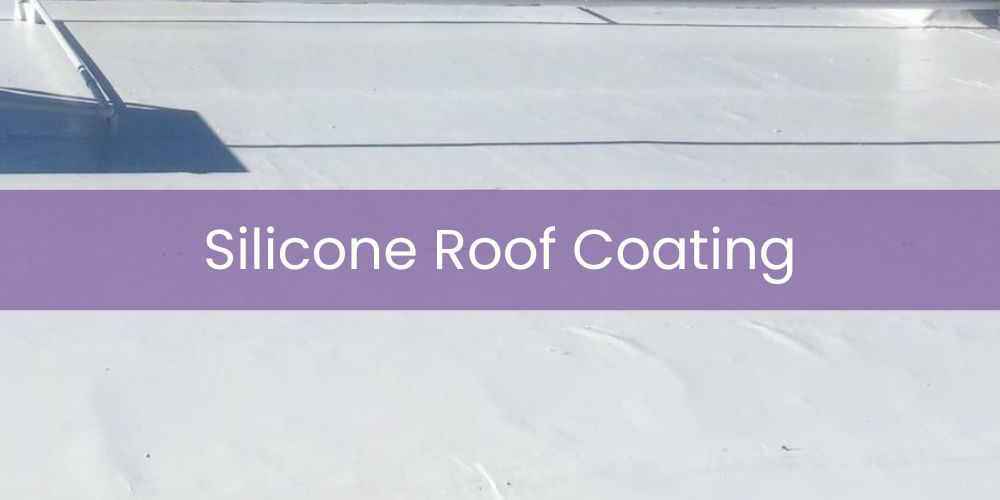
Commercial Roofing Los Angeles applies silicone roof coatings across Los Angeles to block standing water, seal surface failure, and stabilize commercial roofing systems exposed to heat and moisture stress. Silicone roof coating is the process of installing a seamless, moisture-cured elastomeric membrane over an existing commercial roof to create a permanently waterproof, UV-resistant surface that prevents ponding-related leaks and membrane breakdown. This system allows Commercial Roofing Los Angeles to stop moisture migration, resist solar degradation, and protect insulation and roof decks beneath the surface. Silicone coating is used on Los Angeles commercial buildings where flat roofs hold water after rain, sunlight degrades membranes, and thermal cycling opens seams and surface cracks. By forming a hydrophobic, non-absorptive barrier, silicone coatings prevent water from entering or spreading through the roof assembly even when ponding remains on the surface. Commercial Roofing Los Angeles applies silicone coating systems to keep commercial buildings watertight, thermally stable, and structurally protected under Southern California’s heat, sun, and rain cycles.
How Does Silicone Roof Coating Stop Ponding Water and Heat-Driven Roof Failure in Los Angeles?
Los Angeles commercial roofs fail because water and heat concentrate damage in flat-roof systems. After rain, ponding water sits on low-slope surfaces where it penetrates weakened seams, aged membranes, and hairline cracks. At the same time, intense solar exposure heats roofing materials during the day and cools them at night, forcing expansion and contraction that widens those openings. Once moisture enters the roof system, it migrates through insulation and deck layers, causing energy loss, corrosion, and leaks that appear far from their origin. Commercial Roofing Los Angeles stops this failure process by applying silicone roof coatings that create a continuous, non-absorptive waterproof surface. The silicone membrane fully encapsulates cracks, seams, and worn areas so water cannot enter or spread beneath the roof, even when ponding remains for long periods. Because silicone is inherently UV-resistant and chemically stable, it does not dry out, chalk, or fracture under extreme solar exposure. Silicone coating systems applied by Commercial Roofing Los Angeles remain flexible under daily temperature swings while maintaining permanent adhesion to the roof surface. This allows the roof coating to move with the building as heat loads change without opening leak paths, preserving waterproofing, thermal performance, and structural integrity across Los Angeles commercial roofs.
What Is Silicone Roof Coating and How Is It Used in Los Angeles?
Silicone roof coating is a roof restoration service that applies a moisture-cured, fluid-applied elastomeric membrane over an existing commercial roofing system to restore waterproof continuity without removing the underlying assembly. The service is defined by surface preparation, localized reinforcement, and controlled membrane application rather than tear-off or material layering. Silicone coatings cure into a seamless, hydrophobic membrane when the roof deck and insulation remain structurally serviceable. In Los Angeles, Commercial Roofing Los Angeles uses silicone roof coating on warehouses, office buildings, retail centers, and industrial properties where roofs are exposed to sustained radiative stress, thermal cycling, and frequent ponding from limited but intense rainfall events. The service is selected when ultraviolet exposure, heat-driven movement, and standing water have compromised the roof surface but full roof replacement is not required. Applications are engineered to match flat roof geometry, drainage behavior, and movement patterns under Southern California climate conditions.
The service methods and membrane behaviors that allow silicone roof coating to perform in Los Angeles create the following performance relationships:
- Hydrophobic silicone membrane → repels standing water → hydrological exposure does not penetrate the surface
- Moisture-cured elastomeric chemistry → forms continuous waterproof film → seams and joints are eliminated as entry points
- High UV resistance → withstands radiative stress → prolonged sun exposure does not degrade the membrane
- Elastic membrane behavior → accommodates thermal cycling → expansion and contraction do not fracture the coating
- Adhered coating interface → secures membrane to substrate → wind forces do not lift or peel the surface
- Non-absorptive material structure → prevents moisture uptake → ponding water does not saturate the system
- Reinforced detail application → stabilizes penetrations and transitions → rooftop interfaces do not become leak paths
Have a question about an upcoming project?
Where Does Silicone Roof Coating Block Ponding Water and Thermal Fatigue on Los Angeles Commercial Roofs?
We apply silicone roof coating on Los Angeles commercial roofs where water and heat concentrate stress at low points, seams, drains, and penetration transitions rather than across the roof field evenly. Flat roof geometry and episodic heavy rain leave standing water at bowls and depressions, while daily solar heating and nighttime cooling force surface movement that widens cracks and weakens interfaces. When we install silicone coating, the moisture-cured membrane forms a continuous, hydrophobic surface that seals these entry zones so ponded water remains above the waterproofing plane instead of migrating into seams, insulation, or the deck. We design the coating around roof elements that activate failure under Los Angeles conditions. Drains, scuppers, equipment curbs, and walk paths experience repeated wetting, abrasion, and thermal cycling that degrade conventional surfaces. We reinforce these areas and maintain membrane thickness so the silicone layer resists UV exposure, tolerates standing water, and stays elastic as the roof expands and contracts. This keeps joints closed, prevents moisture uptake, and preserves adhesion as heat loads change.
The performance of silicone roof coating on Los Angeles commercial buildings can be reduced to direct cause-and-effect relationships between membrane behavior, local stressors, and roof system outcomes:
- Hydrophobic silicone membrane → prolonged ponding water → water does not penetrate the surface
- Moisture-cured continuous film → seam and crack exposure → entry points are eliminated
- UV-stable chemistry → sustained solar radiation → membrane does not chalk or fracture
- Elastic silicone layer → daily thermal cycling → expansion and contraction do not open cracks
- Reinforced detailing at drains and curbs → repeated wetting and abrasion → interfaces do not become leak paths
- Adhered coating interface → wind uplift and edge movement → coating does not lift or peel
When Does Silicone Roof Coating Become the Correct Solution in Los Angeles?
If your Los Angeles commercial roof experiences persistent ponding water that cannot be fully eliminated through slope correction or drainage modification, silicone roof coating may be the correct stabilization solution. Under Southern California sun exposure and daily thermal cycling, standing water accelerates the breakdown of most membranes and coating systems, which absorb moisture, lose adhesion, or degrade when water remains on the surface. Silicone coatings are uniquely engineered to remain permanently waterproof and non-absorptive even under continuous ponding, making them appropriate where water retention is an unavoidable condition of the roof geometry. We determine whether your building’s drainage behavior, roof slope, and exposure profile require a coating system designed specifically to perform under long-term water immersion rather than reflective or moisture-shedding conditions. If your roof holds water after rain, shows deterioration concentrated in ponding zones, or has a history of moisture-related surface failure, silicone roof coating may be the appropriate solution for long-term stabilization under Los Angeles conditions.